
Fence inspiration
Look at the whole property, not just the panel.
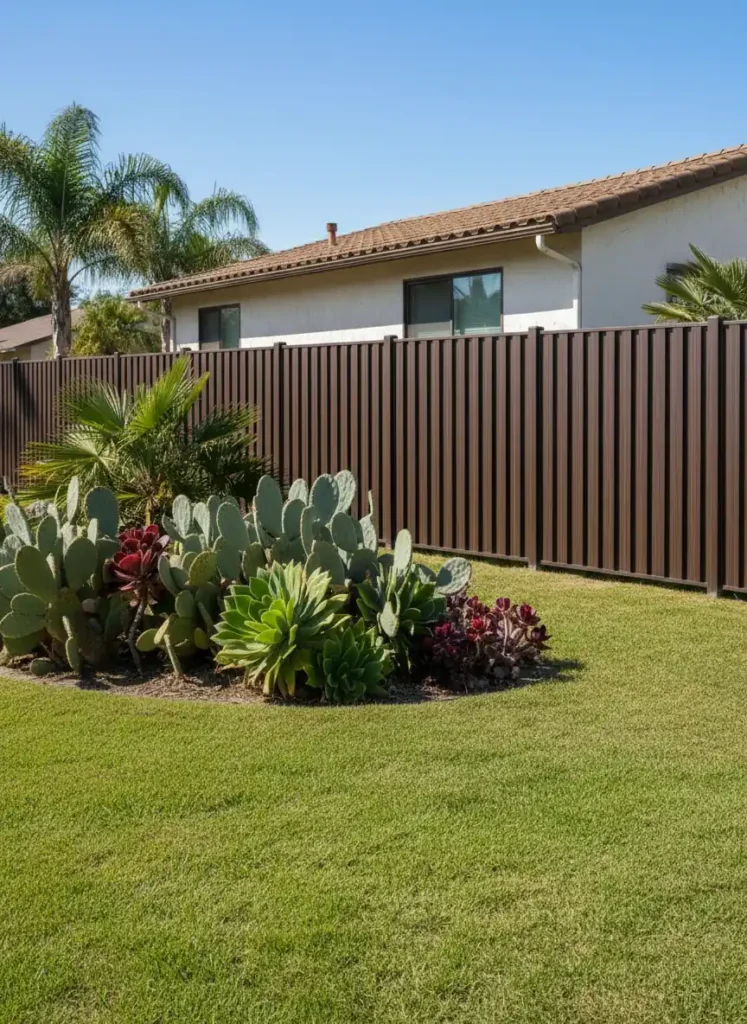
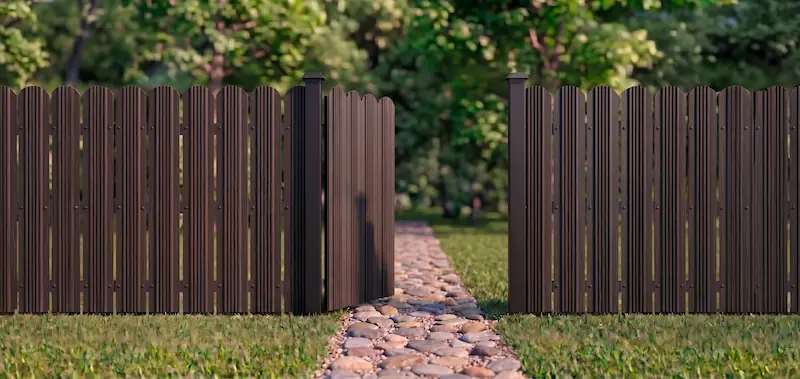
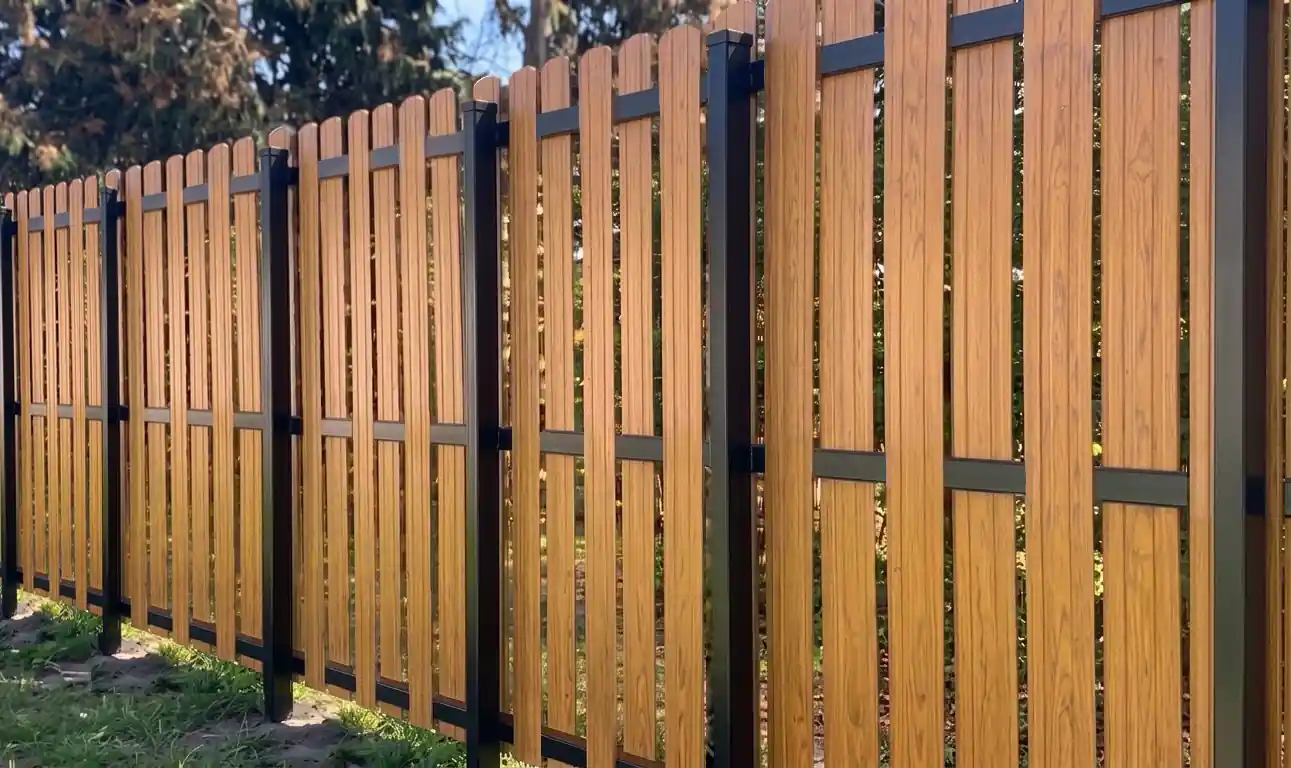
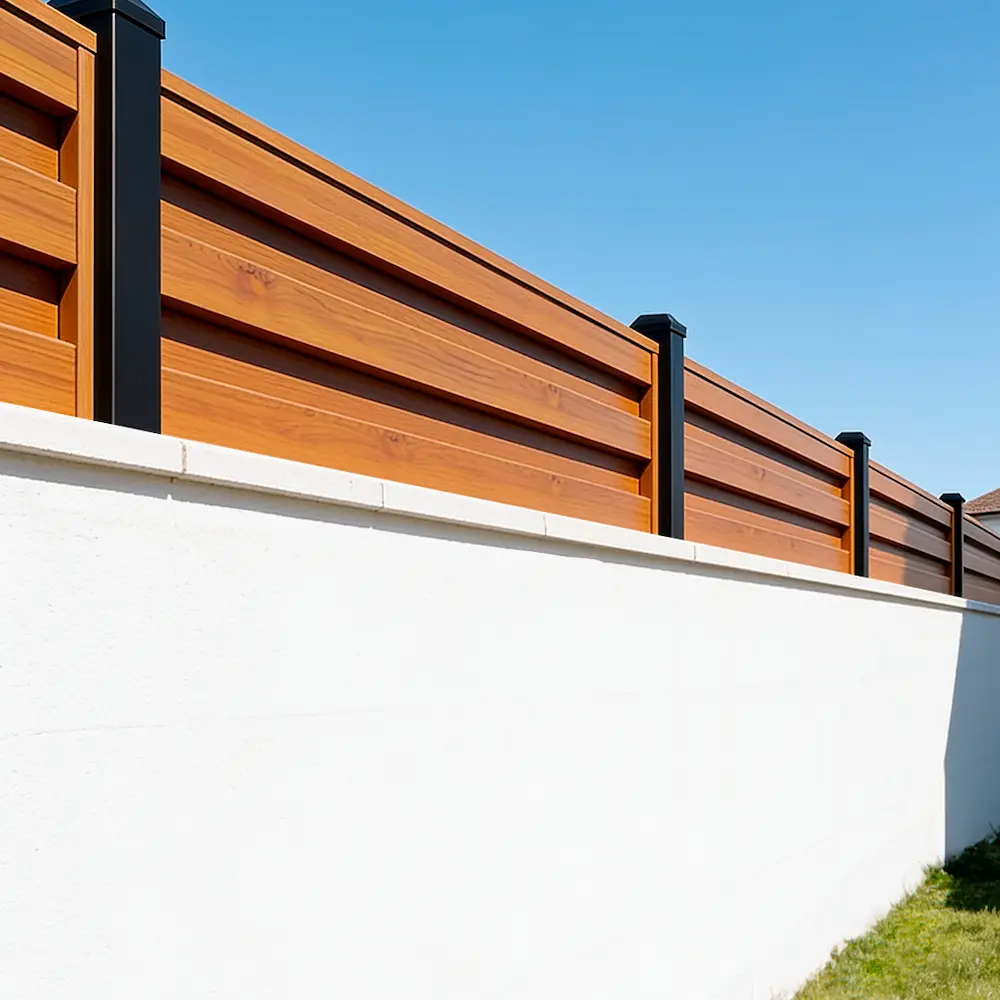
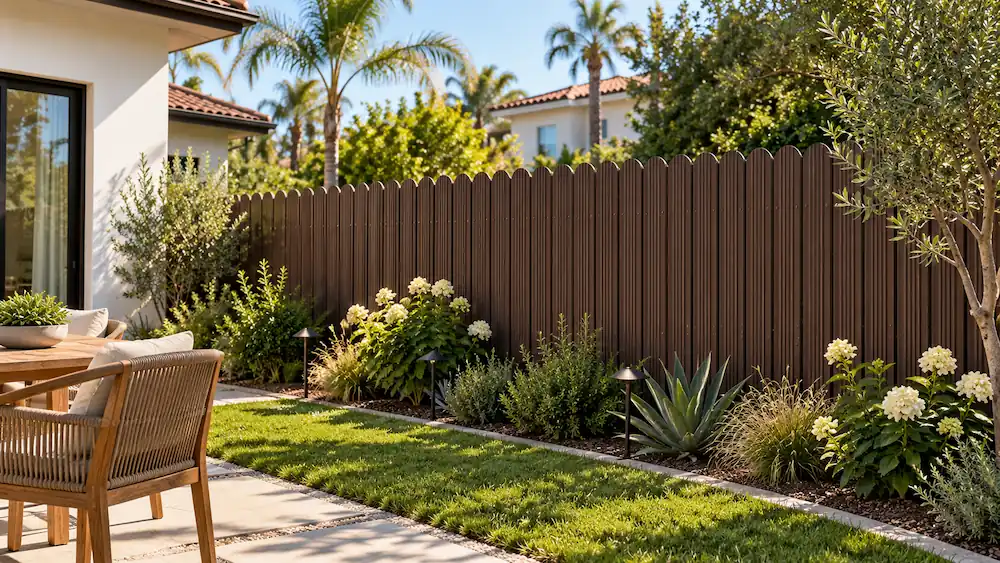
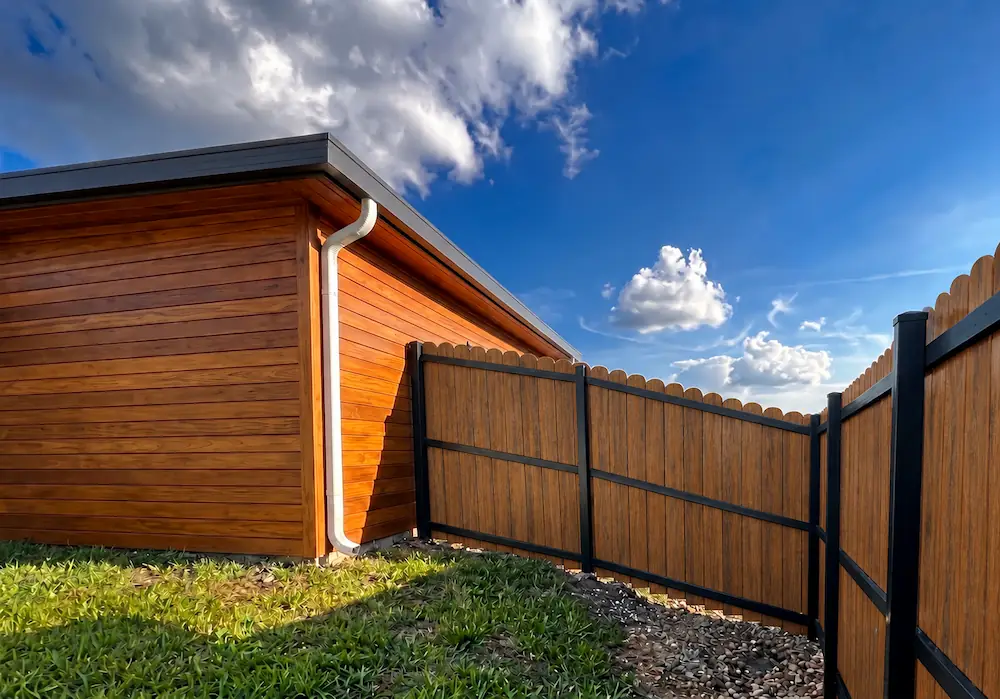
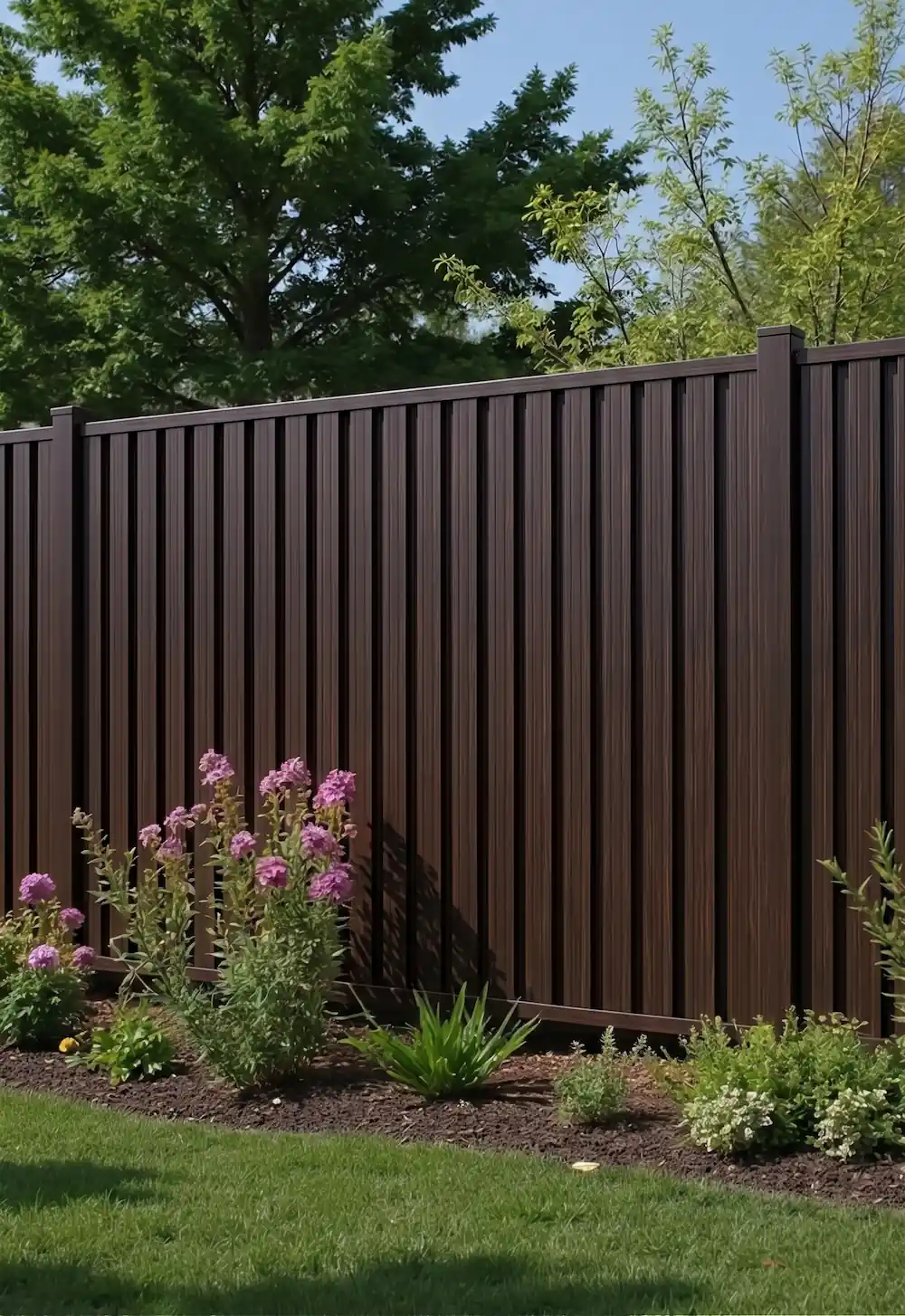
Browse Lumenar design ideas by privacy level, orientation, texture and application. The useful question is not only, Do I like this fence?. It is Would this work with my house, my lot and the way I use the yard?
Privacy projects
Look for how the fence changes the feeling of the yard from inside the house. A full privacy run should create a backdrop, not make the space feel smaller.
Street-facing projects
Front and side runs have to work with curb appeal, gates and the elevation of the house. The Double Side Panel, vertical or horizontal, is especially strong here.
Shared boundaries
Good neighbor projects are useful references because they show how the same line reads from both properties and how gates or returns are handled.
See a texture you like?
Use project photography to narrow the direction, then make the final color choice from a physical sample before your distributor prices the project.
Privacy fence ideas for real California yards
Privacy does not have to mean one visual answer. The right system depends on the house, the view you are trying to block and whether the fence is mainly seen from the yard, the street or both.
Traditional backyard privacy
Shared property lines
Contemporary privacy
Small yards need a lighter hand.
A tall fence can make a compact yard feel private or closed in. The difference is often the color, planting and how much visual texture is concentrated at the perimeter.
For a smaller backyard, keep the fence face simple and avoid stacking too many strong materials in the same view. A lighter wood-grain such as White Oak, or Senda Solid White, can help. If full privacy is only needed at one seating area, consider whether another portion of the property can use semi-privacy instead of turning the whole yard into a solid box.
Ideas for HOA and community projects
Community fencing has to look consistent from house to house and still be serviceable years later.
Approve a physical sample
Keep the sample with the community standard so later repairs and new phases have a real reference.
Standardize the visible details
Define height, profile, texture, gate style and the appearance of shared property lines rather than approving only a generic product family.
Photograph the approved condition
A simple installed reference helps homeowners, property managers and future contractors understand what the community expects without reopening every design decision.
Gate and entry inspiration
The gate is often the part of the fence people notice first because it sits at a path or entry. Use it to reinforce the fence rather than introduce a second design language.
Side-yard gate
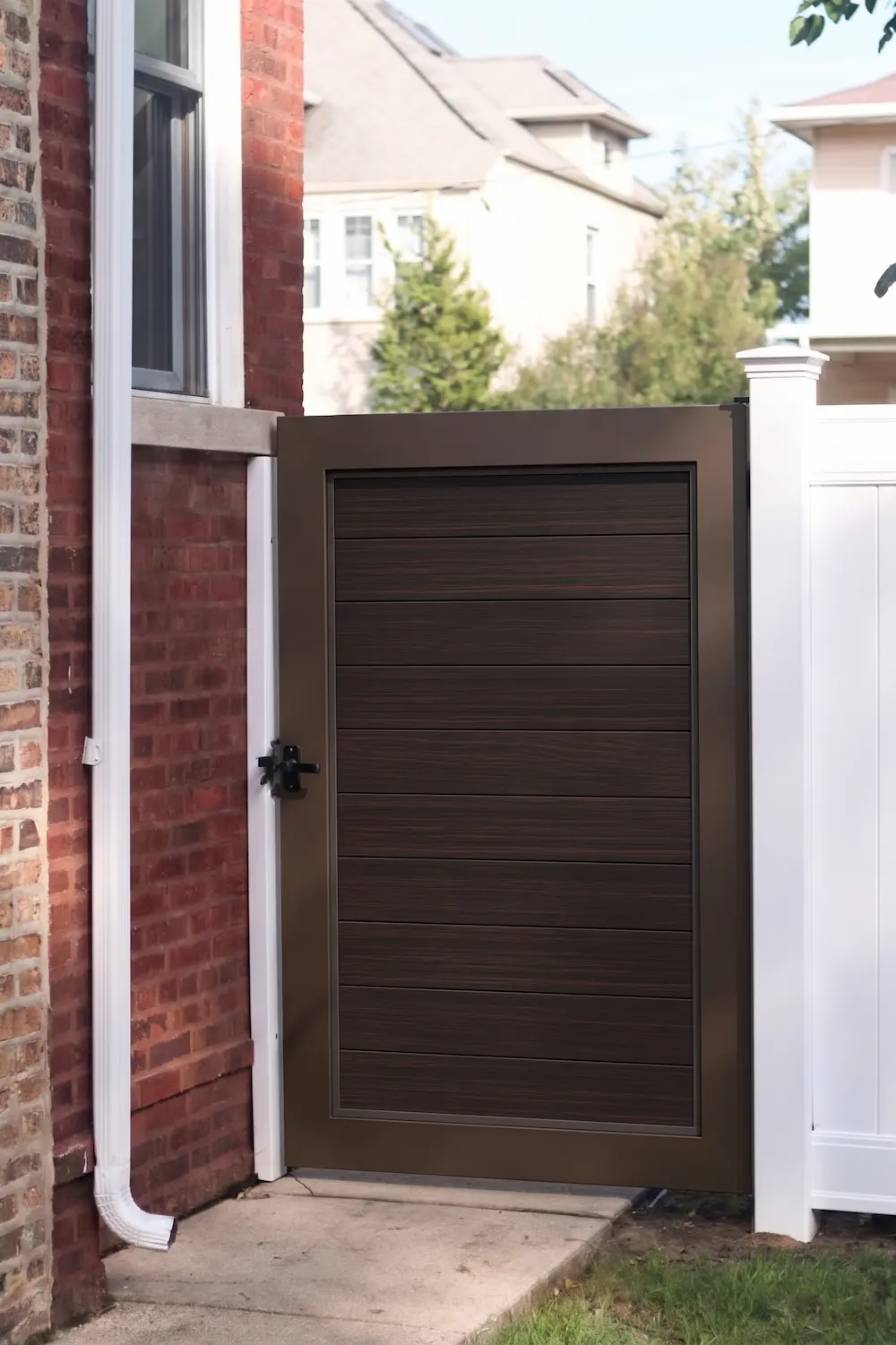
Keep the gate simple and aligned with the surrounding privacy fence. If the path is narrow, pay attention to swing clearance and how the handle or latch reads from the approach.
Front entry gate
At a street-facing entry, the gate can be slightly more expressive while still carrying the same profile and texture. Lighting, address numbers and landscape can do more of the visual work than changing the fence material.
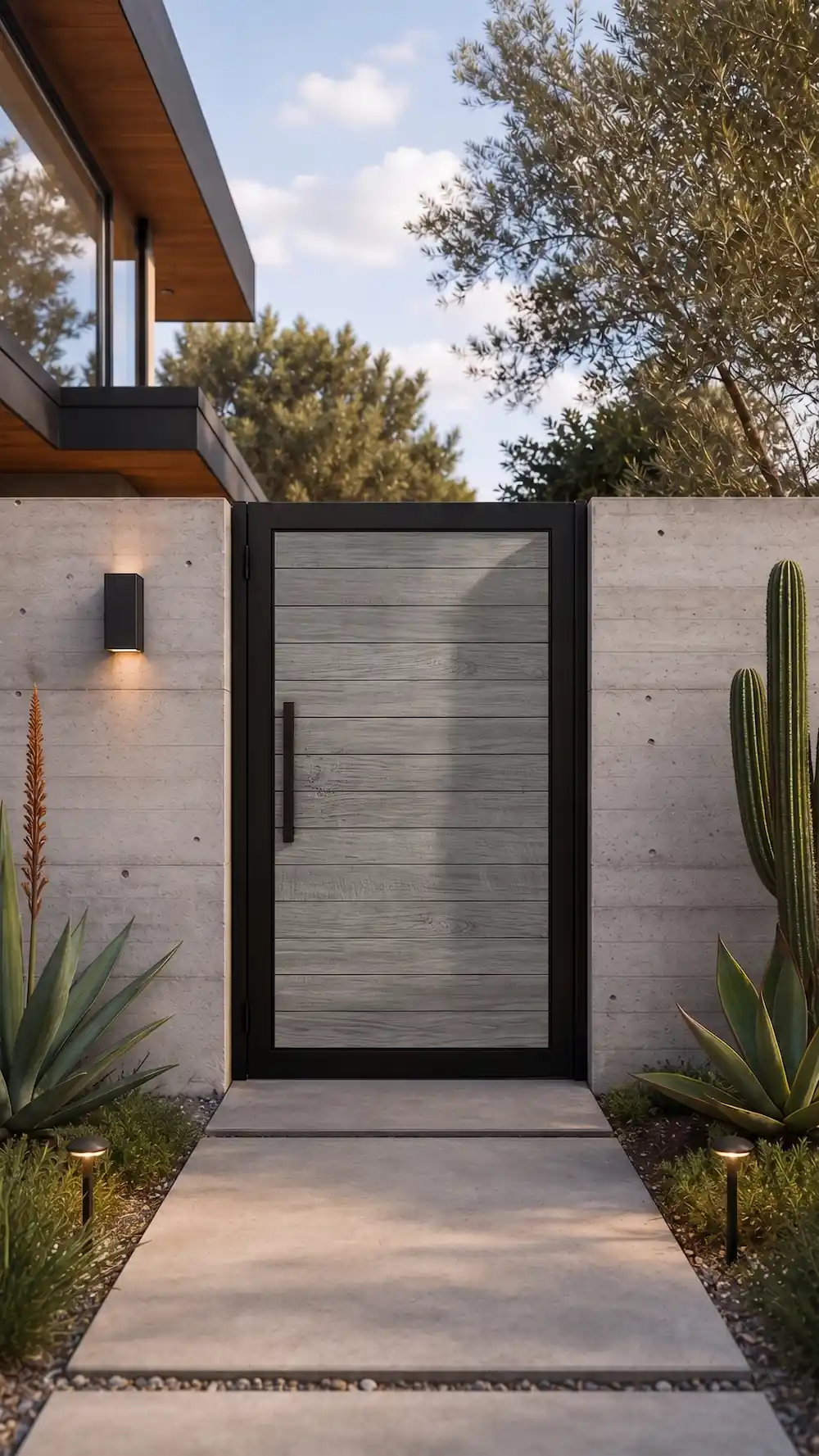
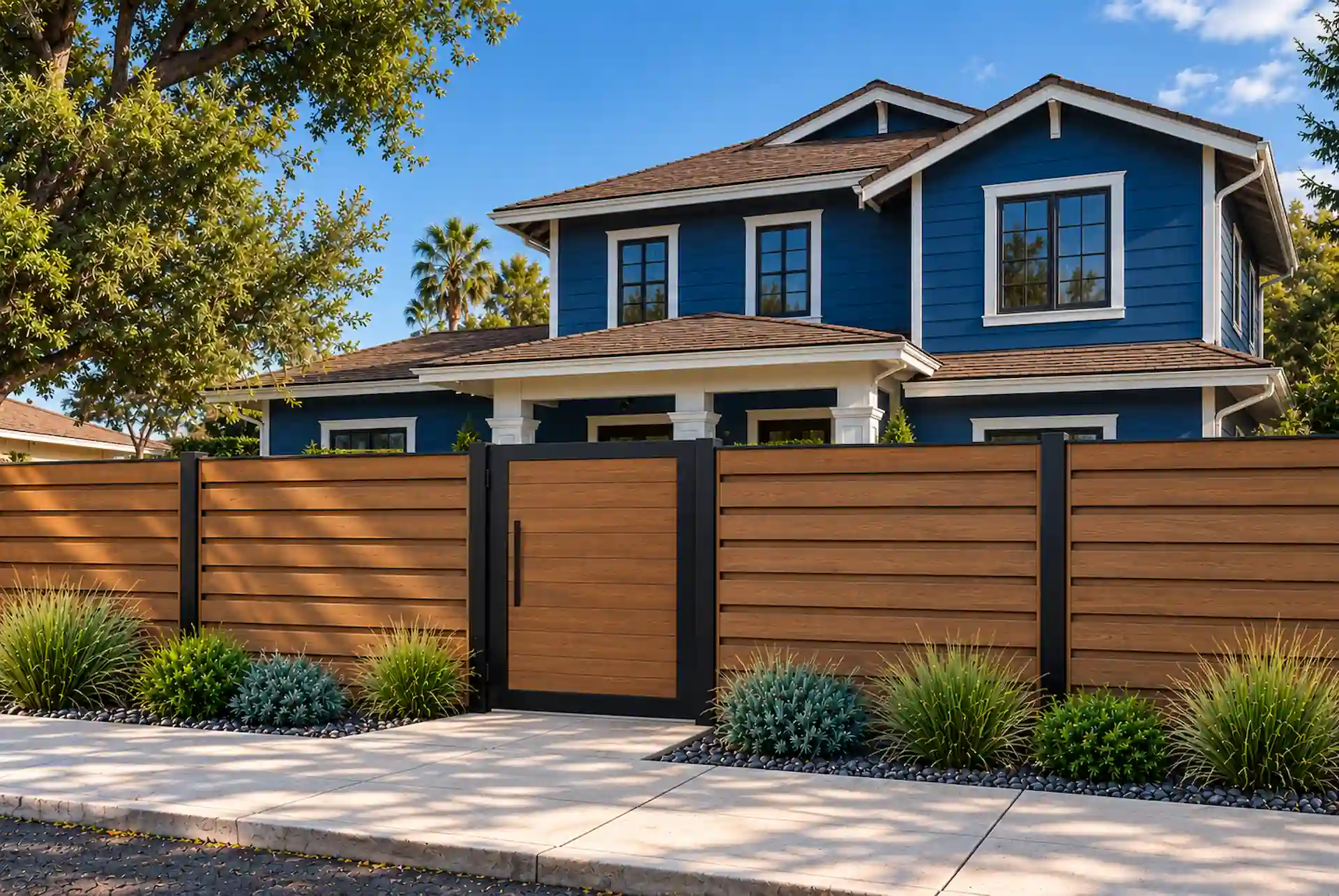
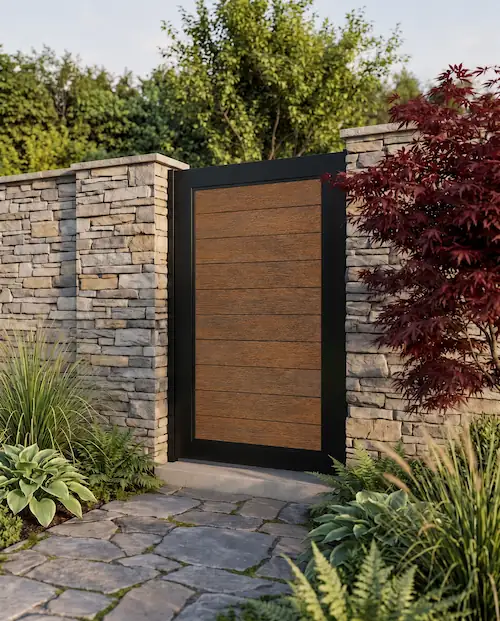
Fence and gate combinations
A gate looks most intentional when its infill, direction and texture pick up the surrounding fence. The Aldera Side Gate carries that visual language through pedestrian openings, so the opening feels integrated instead of added later. When you save an inspiration image, look at how the fence lines continue through the gate, how the hardware sits against the texture and how the opening changes the rhythm of the run.
One last filter: think about maintenance access. Planting, pool equipment, utility meters and side-yard paths still need room after the fence is installed. The best inspiration image is not only beautiful. It also shows a layout that works when someone has to open a gate, clean the yard, move a trash bin or service equipment later.