
Adopted
By the Board, 8–0.
California has written new rules for the first five feet around homes in certain fire-prone areas, including where a fence or gate meets the house. This page explains where the rule stands today, what the adopted text says about fences and gates, and how to evaluate an architectural metal fence without turning a material choice into a claim the documentation cannot support.
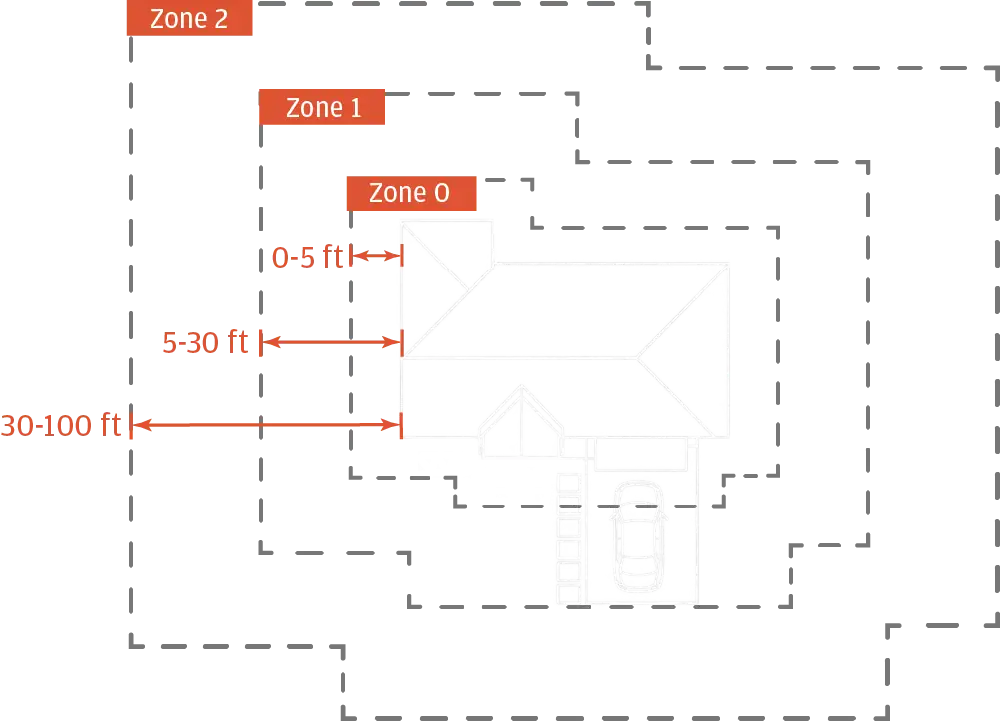
Zone 0 is the ember-resistant area immediately around a structure. California law directs the Board of Forestry and Fire Protection to set requirements for that first five-foot area in State Responsibility Areas and in Very High Fire Hazard Severity Zones within Local Responsibility Areas.
The area closest to the building, where embers collect and where nearby combustible material can expose the structure to heat or flame.
A fence or gate can run directly into the wall of a house. When it is combustible, it can become a continuous fuel path from the yard to the structure.
The Board adopted the rule in August 2026, then pulled it back from final review for technical edits. Today there is no effective date.
The Board of Forestry adopted the Zone 0 regulations on August 19, 2026 and sent them to the Office of Administrative Law on August 28. On September 8 the Board withdrew the package from that review to make technical edits before resubmitting it.
As of October 28, 2026, the statewide rule is not in effect, it has no effective date and no statewide compliance deadline is running. Zone 1 and Zone 2 defensible-space rules still apply, and some cities and counties already enforce their own ember-resistant requirements. Before a permit, specification or replacement decision, check the rule and local requirements that apply to the property on that date.
By the Board, 8–0.
Withdrawn from review for edits.
Effective date not set.
Fence phase-in for existing homes, once effective.
Summary of the text the Board adopted on August 19, 2026. The Board may edit it before resubmission, so confirm the final text when it takes effect.
The base metal in a galvanized fence does not behave like a combustible wood fence. Whether a specific product meets a rule, however, depends on the exact assembly, the test record and the rule being applied.
The rule’s definition of noncombustible refers to ASTM E136 and the California wildfire building framework. Product evidence has to match what is actually installed: panels, posts, rails, coatings and accessories can all matter. Lumenar publishes the documentation that applies to each product instead of a generic fire badge. Today that means: Aldera is ignition-resistant and tested to ASTM E2768.
A fence does not need to be replaced end to end. The work concentrates where the run meets the house.
Use the Double Side Panel for the section closest to the home: full privacy and the same finished face on both sides.
Continue with Picket Fence in the Aldera or Senda collection, so the transition does not read as a patch.
Where the gate sits next to the home, the prefabricated Aldera Side Gate keeps the access point in metal and matches the fence.
Start with the current California fire hazard severity maps and the local jurisdiction. Zone 0 does not apply to every property in the same way.
Map where the fence, gate, vegetation, mulch and stored material sit in relation to the structure.
If the project is moving away from combustible fencing near the structure, compare metal, masonry and other approaches allowed under the rule in effect.
Use the test report or listing for the exact product and configuration. One product record does not cover a whole brand.
Give the installer the connection detail before material is installed and verify that the field condition matches the design.
Not statewide. The Board of Forestry adopted the rule on August 19, 2026, then withdrew it from final legal review on September 8 to make technical edits. Until it is resubmitted and approved, there is no effective date. Some local jurisdictions already have their own requirements.
No. Under the adopted text, existing fences can stay and be repaired. What changes, once the rule takes effect, is the five-foot section where the fence or gate attaches to the house, in the later phase three to five years after the effective date.
The adopted text does not allow new combustible fences or gates within five feet of the home once it takes effect. Check local rules too, since some cities already restrict it.
Do not assume it from the material name. Check the rule in effect, the complete installed assembly and the documentation for the exact product.
Rebuild permits come with their own requirements. Start with the Rebuild guide and confirm with your city or county.
The local authority having jurisdiction, usually the city or county fire department or building department.
General information, not a code interpretation. Zone 0 requirements, timelines and local amendments vary by jurisdiction and change over time. Confirm with the authority having jurisdiction before specifying.
The status block (last review date, metrics and first FAQ) is the only information that changes over time. Review monthly or when the Board resubmits the package to the OAL (original filing 2026-0828-03E).
Lumenar does not claim "Zone 0 compatible": the rule requires "noncombustible" (ASTM E136), while Lumenar documents "ignition resistant" (ASTM E2768).